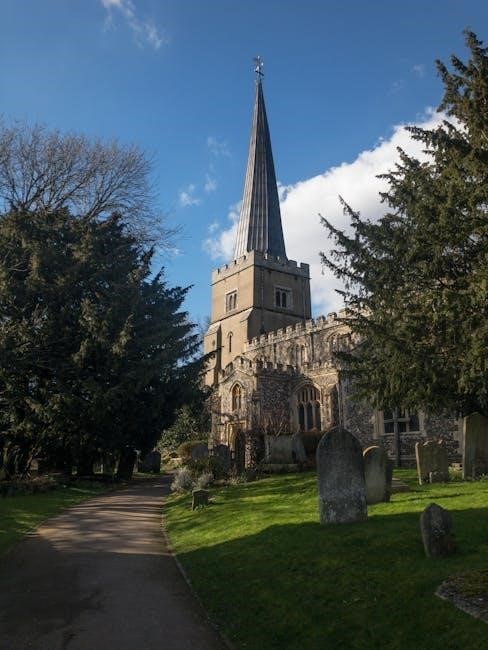
Mary Oliver’s “When I Am Among the Trees” PDF: A Comprehensive Guide
This guide explores accessing the poem “When I Am Among the Trees” as a PDF‚ delving into its themes and context‚
with a focus on its spiritual resonance and the enduring appeal of Mary Oliver’s work.
Mary Oliver’s “When I Am Among the Trees” is a beloved poem frequently sought in PDF format for study and personal enjoyment. Published in 2006‚ and revisited in 2019‚ the poem’s concise yet profound exploration of nature’s solace resonates deeply with readers. Its accessibility and evocative imagery contribute to its widespread popularity‚ making it a staple in contemporary poetry collections.
The poem’s core lies in the speaker’s experience of finding “hints of gladness” amongst trees – willows‚ honey locusts‚ beeches‚ oaks‚ and pines. This simple observation blossoms into a meditation on spirituality and the restorative power of the natural world. The poem’s availability online‚ often as a freely downloadable PDF‚ further amplifies its reach‚ allowing it to be shared and appreciated by a broad audience. Its enduring appeal stems from Oliver’s ability to articulate a universal longing for connection and peace.
Availability of the PDF Version
The PDF version of “When I Am Among the Trees” is readily accessible online through various platforms. Numerous websites offer free downloads‚ allowing readers to easily obtain a digital copy for offline reading and study. Search results from January 15th‚ 2026‚ and dates spanning from August 15th‚ 2025‚ to October 4th‚ 2024‚ confirm its widespread availability in .pdf and .txt formats.
However‚ users should exercise caution when downloading PDFs from the internet. Potential issues include encountering websites with malicious software or low-quality scans. It’s crucial to prioritize reputable sources to ensure a safe and reliable download. Furthermore‚ awareness of copyright considerations is essential; while many PDFs are shared legally‚ respecting intellectual property rights remains paramount. File sizes vary‚ ranging from 138 KB to 212 KB‚ depending on formatting and image inclusion.
Understanding Mary Oliver’s Poetic Style
Mary Oliver’s poetic style is characterized by a profound connection to nature and a deeply observant eye. Her work frequently explores themes of spirituality‚ joy‚ and the interconnectedness of all living things. Oliver’s language is remarkably accessible‚ yet imbued with a lyrical quality that resonates with readers on an emotional level. She avoids complex metaphors‚ preferring direct and evocative imagery‚ as seen in “When I Am Among the Trees.”
A hallmark of her poetry is the use of simple‚ yet powerful‚ diction. She masterfully captures the essence of natural phenomena‚ imbuing them with a sense of wonder and reverence. Oliver’s poems often read as meditative reflections‚ inviting readers to contemplate their own relationship with the natural world. Her consistent focus on “hints of gladness” exemplifies her optimistic and life-affirming perspective‚ making her work universally appealing.

Analyzing “When I Am Among the Trees”
This section dissects the core elements of Oliver’s poem‚ examining its central themes of nature and spirituality‚ the symbolic weight of trees‚ and the poem’s evocative imagery.
Central Themes: Nature and Spirituality
Mary Oliver’s “When I Am Among the Trees” profoundly intertwines the natural world with a sense of spiritual awakening. The poem doesn’t present a traditional religious framework‚ but rather suggests a divine presence within nature itself. The “hints of gladness” emanating from the trees aren’t merely aesthetic sensations; they represent a deeper connection to something transcendent.
Oliver consistently uses nature as a conduit for exploring existential questions. The trees become witnesses to a quiet joy‚ a feeling of belonging and peace that transcends the everyday. This isn’t about worshipping a deity in nature‚ but recognizing the sacredness of nature. The poem implies that true fulfillment isn’t found in human pursuits‚ but in surrendering to the rhythms and beauty of the natural world.
This spiritual dimension is subtle yet powerful‚ inviting readers to contemplate their own relationship with the environment and the possibility of finding solace and meaning in its embrace. The poem’s accessibility lies in its ability to evoke this feeling universally‚ regardless of religious belief.
The Significance of Trees in the Poem
Trees are not merely a backdrop in “When I Am Among the Trees”; they are central to the poem’s emotional and spiritual core. Oliver specifically names willows‚ honey locusts‚ beeches‚ oaks‚ and pines‚ suggesting a deliberate choice to represent a diverse range of arboreal life. Each tree type carries its own symbolic weight‚ contributing to the poem’s layered meaning.
The trees function as silent confidantes‚ witnesses to a private‚ internal experience. They “give off such hints of gladness‚” implying an active‚ benevolent presence. This isn’t a human-centric view of nature; rather‚ the trees possess an inherent quality of joy that is offered to the speaker.
Furthermore‚ trees symbolize rootedness‚ stability‚ and longevity. They represent a connection to the earth and a sense of timelessness‚ contrasting with the fleeting nature of human existence. Oliver’s focus on trees highlights their enduring power and their ability to inspire awe and reverence.
Exploring the “Hints of Gladness”
The phrase “hints of gladness” is pivotal to understanding the poem’s subtle emotional landscape. It’s not an overwhelming joy‚ but a delicate‚ understated feeling emanating from the trees themselves. This suggests a quiet‚ pervasive happiness inherent in the natural world‚ accessible to those who are receptive.
Oliver doesn’t explicitly define the source of this gladness‚ leaving it open to interpretation. It could stem from the trees’ resilience‚ their connection to the earth‚ or simply their existence as living beings. The ambiguity enhances the poem’s mystical quality.
The “hints” imply a passive reception of joy‚ rather than an active pursuit. The speaker doesn’t seek gladness; it is offered by the trees. This emphasizes the importance of surrender and openness to the beauty and wonder of nature. It’s a gentle invitation to find peace and contentment in the present moment.
The Poem’s Religious and Cultural Context
Exploring the cultural significance of “Mary‚” the poem subtly echoes the Virgin Mary’s veneration in Christianity and Islam‚
highlighting themes of reverence and spiritual connection.
Mary (Mother of Jesus): Historical Background
Understanding Mary’s historical context is crucial‚ as she was a first-century Jewish woman from Nazareth‚ the wife of Joseph‚ and the mother of Jesus.
Her story‚ initially rooted in Jewish tradition‚ quickly became central to the burgeoning Christian faith. Early Christian writings‚ like those found in the Gospels‚
detail her pivotal role in the birth of Jesus and her unwavering devotion.
Over time‚ narratives surrounding Mary evolved‚ solidifying her position as a figure of immense spiritual importance.
She transitioned from a historical figure to a symbol of purity‚ compassion‚ and divine grace.
This evolution is reflected in the diverse artistic and literary representations of Mary throughout history.
Her veneration extends beyond Christianity; Islam also holds Mary (Maryam) in high esteem‚ dedicating Surah 19 of the Quran to her story.
This shared reverence underscores Mary’s universal appeal as a symbol of faith and motherhood‚ influencing cultural perceptions for centuries.
The Virgin Mary in Christianity
Within Christianity‚ Mary holds a uniquely revered position‚ often celebrated as the “Mother of God” – a title affirming Jesus’s divine nature.
Eastern Orthodox Churches‚ Catholicism‚ and various Protestant denominations all acknowledge her significance‚ though interpretations vary.
She’s venerated under numerous titles‚ including “Virgin” and “Queen of Heaven‚” frequently invoked in prayer and liturgical practices.
Central to her veneration is the belief in her perpetual virginity‚ a doctrine emphasizing her purity and special relationship with God.
This belief has profoundly shaped artistic depictions and theological discussions throughout Christian history.
The Assumption of Mary‚ celebrated on August 15th‚ signifies her bodily ascent into Heaven‚ representing ultimate glorification.
Mary serves as a powerful symbol of faith‚ obedience‚ and maternal love‚ inspiring countless acts of devotion and artistic expression.
Her story continues to resonate with believers‚ offering a model of humility and unwavering trust in God’s plan.
The Virgin Mary in Islam (Surah Maryam)
Islam holds Maryam (Mary) in exceptionally high esteem‚ dedicating an entire chapter of the Quran – Surah Maryam (Chapter 19) – to her story.
This Surah details her miraculous conception of Isa (Jesus) and her unwavering devotion to God. Unlike some Christian interpretations‚ Islam emphasizes Mary’s virginity as a sign of her purity and divine favor.
The Quranic narrative portrays Maryam as a righteous and pious woman‚ chosen by God above all women. She is depicted receiving divine messages and performing acts of worship.
Her story serves as a testament to God’s power and the importance of faith and submission.
While differing from Christian theology regarding Jesus’s divinity‚ Islam shares a profound respect for Maryam as a prophetess and a role model for believers.
Her narrative underscores the shared Abrahamic roots of Islam‚ Christianity‚ and Judaism‚ highlighting common themes of faith and divine revelation.

Finding and Accessing the PDF
Locating a PDF of “When I Am Among the Trees” requires careful navigation‚ ensuring reliable sources and respecting copyright laws to enjoy Oliver’s beautiful poetry.
Reliable Sources for Downloading the PDF

Finding a legitimate PDF of Mary Oliver’s “When I Am Among the Trees” necessitates utilizing trustworthy online platforms. While a direct official source from Mary Oliver’s estate might be limited‚ several avenues offer access. Reputable poetry websites often host PDFs of classic and contemporary poems for educational purposes. University library databases‚ accessible with student or alumni credentials‚ frequently contain scholarly collections including Oliver’s work.
Project Gutenberg and similar digital libraries‚ dedicated to free ebooks‚ can sometimes feature poetry collections containing the desired poem. However‚ verifying the edition and accuracy is crucial. Online bookstores like Amazon or Barnes & Noble may offer PDF versions as part of larger collections or individual poem purchases. Always prioritize sources that clearly indicate legal distribution rights and avoid websites with suspicious download prompts or excessive advertising. Checking for website security (HTTPS) is also a good practice before downloading any file.
Remember to respect copyright regulations and support the author’s work whenever possible by purchasing legitimate copies.
Potential Issues with Online PDF Downloads
Downloading PDFs online‚ particularly for poetry like Mary Oliver’s “When I Am Among the Trees‚” carries inherent risks. A primary concern is the prevalence of malware and viruses disguised as legitimate files. Unofficial websites often bundle harmful software with downloads‚ compromising your device’s security. Another issue is the potential for corrupted or incomplete PDF files‚ rendering them unreadable or displaying incorrectly.
Copyright infringement is a significant problem; many free PDF downloads violate copyright laws‚ potentially exposing you to legal repercussions. Furthermore‚ the quality of PDFs from unverified sources can be poor‚ with formatting errors or inaccurate transcriptions of the poem. Beware of sites requesting personal information before allowing a download – these are often phishing attempts.
Always scan downloaded files with updated antivirus software and exercise caution when opening PDFs from unknown sources. Prioritize reputable platforms and consider purchasing a digital copy from a trusted vendor to ensure quality and legality.

Legality and Copyright Considerations
Copyright law protects Mary Oliver’s “When I Am Among the Trees‚” and unauthorized distribution of the poem in PDF format is illegal. Generally‚ sharing a PDF without permission from the copyright holder – often the publisher – constitutes copyright infringement. This applies even if the sharing is non-commercial‚ such as posting on a personal website or sharing via email.
Fair use exceptions are limited and typically don’t cover distributing an entire poem. Obtaining a legitimate copy through purchase or library access is the legally sound approach. Many websites offering free PDF downloads operate outside the bounds of copyright law‚ potentially exposing users to legal risks‚ though enforcement against individual downloaders is rare.
Respecting copyright supports the author and the publishing industry‚ ensuring continued creation and accessibility of literary works. Always verify the source’s legitimacy and consider purchasing a legal copy to support Mary Oliver’s legacy and artistic endeavors.
Deeper Dive into the Poem’s Meaning
Exploring symbolism and imagery‚ Oliver’s poem connects to Transcendentalism‚ evoking personal interpretation and reader response through nature’s spiritual undertones and subtle gladness.
Symbolism and Imagery Used by Oliver
Mary Oliver masterfully employs symbolism and vivid imagery throughout “When I Am Among the Trees.” The trees themselves aren’t merely botanical entities; they represent a sanctuary‚ a space for spiritual connection and quiet contemplation. Specific trees – willows‚ honey locust‚ beech‚ oaks‚ and pines – are highlighted‚ each potentially carrying unique symbolic weight depending on cultural and personal associations.
The recurring “hints of gladness” are particularly potent. This isn’t an overwhelming joy‚ but a subtle‚ pervasive feeling emanating from the natural world. It suggests a quiet‚ understated spirituality‚ a sense of peace and belonging found in nature’s embrace. Oliver’s language is deliberately sensory‚ appealing to the reader’s imagination through descriptions that evoke sight‚ sound‚ and feeling. This immersive quality draws the reader into the poem’s world‚ allowing them to experience the same sense of wonder and connection that Oliver herself feels.
The poem’s simplicity belies its depth; the imagery isn’t complex‚ but it’s profoundly evocative‚ inviting multiple layers of interpretation and resonating with a universal longing for connection to something larger than oneself.
The Poem’s Connection to Transcendentalism
“When I Am Among the Trees” exhibits strong affinities with Transcendentalist philosophy‚ particularly its emphasis on the inherent goodness of nature and the importance of individual intuition. Like Thoreau and Emerson‚ Oliver finds spiritual truth not in organized religion‚ but in direct experience of the natural world. The poem’s focus on personal connection to the trees echoes the Transcendentalist belief in the “Over-Soul‚” a universal spirit accessible through nature.
Oliver’s depiction of nature as a source of “gladness” aligns with the Transcendentalist celebration of intuition and emotion over reason. The poem isn’t about analyzing nature‚ but feeling it‚ allowing it to inspire a sense of awe and wonder. This emphasis on subjective experience is central to Transcendentalist thought.
Furthermore‚ the poem’s quiet solitude and rejection of societal norms resonate with the Transcendentalist ideal of self-reliance and nonconformity. Oliver seeks solace and truth away from human society‚ finding it instead in the peaceful embrace of the forest.
Personal Interpretation and Reader Response
Mary Oliver’s poetry‚ and “When I Am Among the Trees” specifically‚ invites deeply personal interpretations. The poem’s evocative imagery and ambiguous language allow readers to project their own experiences and emotions onto the natural world described. The “hints of gladness” are not explicitly defined‚ encouraging individual contemplation of what brings joy and spiritual fulfillment.
Reader response is crucial; the poem’s power lies in its ability to resonate differently with each person. Some may interpret the poem as a celebration of simple beauty‚ while others may see it as a profound meditation on faith and the divine. The poem’s accessibility contributes to its widespread appeal.
Ultimately‚ Oliver doesn’t dictate a single meaning. Instead‚ she provides a framework for self-discovery‚ prompting readers to examine their own relationship with nature and their own sources of spiritual connection. The poem’s enduring popularity suggests its universal themes continue to inspire introspection.
The Marian Fathers of the Immaculate Conception
This congregation deeply venerates the Virgin Mary‚ historically focusing on her Immaculate Conception‚ and their devotion aligns with the poem’s subtle spiritual undertones and reverence.
Their Role and Connection to Mary
The Marian Fathers‚ formally known as the Congregation of Marian Fathers of the Immaculate Conception of the Most Blessed Virgin Mary‚ dedicate themselves to propagating devotion to Mary‚ the Mother of Jesus. Founded in the 17th century‚ their historical mission centers on defending the Immaculate Conception dogma‚ a core tenet of Catholic belief.
Their connection to Mary isn’t merely theological; it’s deeply ingrained in their identity and spiritual practices. They actively promote Marian shrines and engage in pastoral work centered around Marian piety. While seemingly distant from Mary Oliver’s poem‚ the congregation’s profound reverence for Mary resonates with the poem’s subtle spiritual undertones.
The poem’s evocation of a peaceful‚ almost sacred connection with nature mirrors the Marian Fathers’ belief in Mary as a conduit to divine grace. Though Oliver doesn’t explicitly mention Mary‚ the poem’s sense of wonder and spiritual awakening finds a parallel in the Marian devotion championed by this congregation.
Historical Context of the Congregation
The Congregation of Marian Fathers originated in Poland in the 17th century‚ a period marked by religious upheaval and the Counter-Reformation. Founded in 1673 by Saint Stanislaus Papczyński‚ the initial impetus was to address the spiritual needs of the Polish-Lithuanian Commonwealth‚ particularly focusing on the plight of marginalized communities.
Early activities included missionary work‚ providing education‚ and caring for the sick and poor. A defining moment arrived with their unwavering defense of the Immaculate Conception of Mary‚ a doctrine facing opposition at the time. This commitment solidified their identity and purpose.
Throughout the centuries‚ the Marian Fathers expanded their reach‚ establishing houses in various countries‚ including the United States. Despite facing periods of suppression and persecution‚ their dedication to Marian devotion and charitable work endured‚ shaping their enduring legacy and continued relevance today.
Relevance to the Poem’s Spiritual Undertones
The poem’s subtle spirituality resonates with the Marian Fathers’ core devotion to Mary‚ though Oliver doesn’t explicitly mention religious figures. The “hints of gladness” experienced amongst trees evoke a sense of divine presence‚ mirroring the contemplative reverence central to Marian spirituality.
The poem’s focus on nature as a conduit for spiritual experience aligns with a broader Christian tradition of finding God in creation. The Marian Fathers‚ through their ministry‚ often emphasize the interconnectedness of faith and the natural world.
Oliver’s work invites readers to a quiet‚ personal encounter with the sacred‚ a sentiment echoed in the Marian Fathers’ emphasis on individual devotion and the importance of a personal relationship with Mary‚ fostering a deeper connection to the divine.